The Future of Business Applications in a Digital World
Wondering how business applications can help streamline your organization? Then, this blog is for you. Read till the end to know what are business applications, their features, types, examples, importance, and benefits.
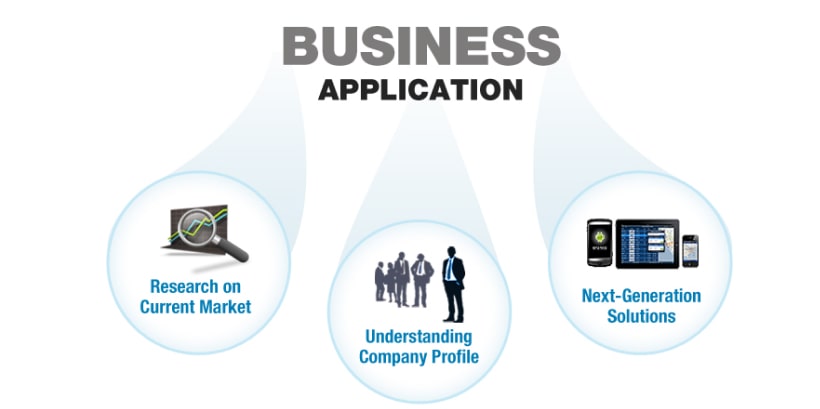 A business application is a collection of components that streamlines the functionality of a business. You can use these internally, externally, or with other business applications as well. Moreover, you have the ability to develop business applications that integrate individual components.Businesses cover an array of functions to ensure smooth workflow and collaboration between employees and customers. These functions include accounting, project management, data analytics, customer relationship management, and much more. Software business applications play an integral part in managing and streamlining these functions within the organization.If you are still finding it hard to understand what are business applications, here is a simpler explanation. Let’s assume a day-to-day scenario of modern businesses. To keep things running, you must overlook several repetitive and complex tasks. Some might be very trivial; however, doing them manually daily will consume time and effort.
On the other hand, certain tasks like drafting emails, following up with leads, or tax and liability calculations are complex and hence require undivided attention. To handle and monitor them all, you would need an application for your business. In this context, you can consider a business application as a backbone for your business.
A business application is a collection of components that streamlines the functionality of a business. You can use these internally, externally, or with other business applications as well. Moreover, you have the ability to develop business applications that integrate individual components.Businesses cover an array of functions to ensure smooth workflow and collaboration between employees and customers. These functions include accounting, project management, data analytics, customer relationship management, and much more. Software business applications play an integral part in managing and streamlining these functions within the organization.If you are still finding it hard to understand what are business applications, here is a simpler explanation. Let’s assume a day-to-day scenario of modern businesses. To keep things running, you must overlook several repetitive and complex tasks. Some might be very trivial; however, doing them manually daily will consume time and effort.
On the other hand, certain tasks like drafting emails, following up with leads, or tax and liability calculations are complex and hence require undivided attention. To handle and monitor them all, you would need an application for your business. In this context, you can consider a business application as a backbone for your business.
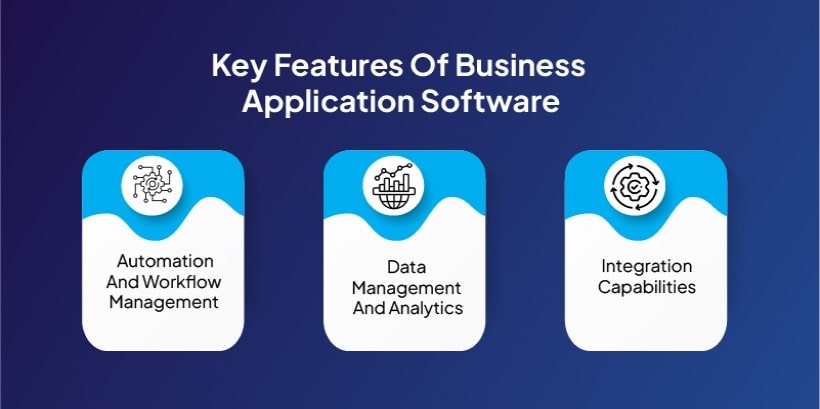 The right business applications help organizations by sharing the load. This is crucial for employees as they can focus on other tasks. To help you understand what is the right application for your business, here are some of the key features.
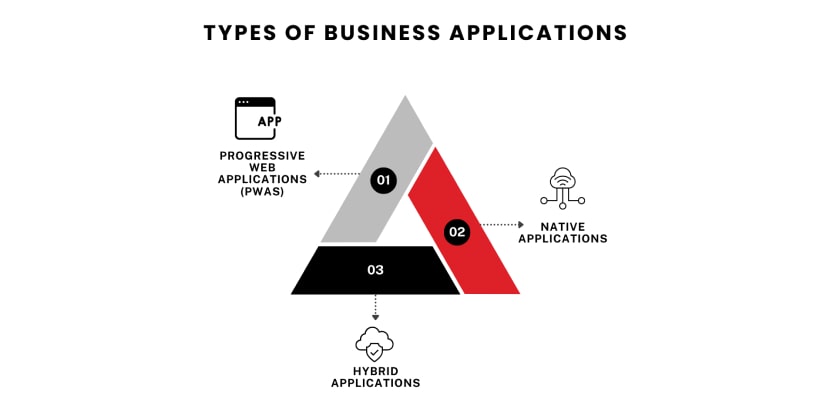 Most software companies offer a wide range of software business applications. The type of application you will be using for your business depends on multiple parameters. Whether you want an application to manage customer relationships, accounting, project management, etc., decides what application you will need.
To delve deeper, let’s take a look at some of the important types of business applications that organizations today rely on.
Most software companies offer a wide range of software business applications. The type of application you will be using for your business depends on multiple parameters. Whether you want an application to manage customer relationships, accounting, project management, etc., decides what application you will need.
To delve deeper, let’s take a look at some of the important types of business applications that organizations today rely on.
 Now you have an idea of the different types of business applications organizations require for their day-to-day functioning. Find below some of the popular software business applications that are dominating the market.
  As the world relies increasingly on digital apps, business applications are becoming an indispensable aspect of modern enterprises.
 Computer business applications are indispensable for day-to-day operations. They help enhance productivity in the following ways.
 With the growing reliance on mobile devices, mobile app design services are in high demand. Reports state that, for online shopping, approximately 85% of shoppers tend to prefer e-commerce apps over websites. This reflects the growing need for mobile apps for businesses to thrive today.Therefore, businesses are also turning to native mobile app development companies and hybrid mobile app development companies to create user-friendly mobile solutions. These applications allow employees and customers to access services on the go. This helps improve accessibility and convenience.React Native app development companies specialize in creating versatile mobile apps that work seamlessly across multiple platforms, further enhancing business operations.
 For a deeper understanding, let’s look at the benefits of business applications.
 Besides the benefits of business applications, you must note certain challenges that organizations tend to face. This will enable you to remain prepared for any obstacles that may arise when deploying the appropriate business application software.
The points below will take you through the common challenges or risks you might come across while setting up a business application.
Besides the benefits of business applications, you must note certain challenges that organizations tend to face. This will enable you to remain prepared for any obstacles that may arise when deploying the appropriate business application software.
The points below will take you through the common challenges or risks you might come across while setting up a business application.
 The right tools and frameworks can streamline the software development lifecycle and boost efficiency. Popular options include:
What Are Business Applications?
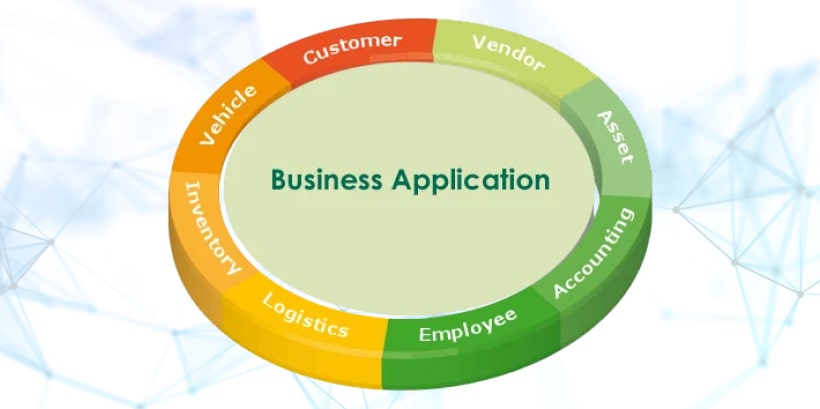
A business application is a collection of components that streamlines the functionality of a business. You can use these internally, externally, or with other business applications as well. Moreover, you have the ability to develop business applications that integrate individual components.Businesses cover an array of functions to ensure smooth workflow and collaboration between employees and customers. These functions include accounting, project management, data analytics, customer relationship management, and much more. Software business applications play an integral part in managing and streamlining these functions within the organization.If you are still finding it hard to understand what are business applications, here is a simpler explanation. Let’s assume a day-to-day scenario of modern businesses. To keep things running, you must overlook several repetitive and complex tasks. Some might be very trivial; however, doing them manually daily will consume time and effort.
On the other hand, certain tasks like drafting emails, following up with leads, or tax and liability calculations are complex and hence require undivided attention. To handle and monitor them all, you would need an application for your business. In this context, you can consider a business application as a backbone for your business.
- It enhances project management.
- SDLC ensures the timely delivery of projects.
- It also minimizes errors and improves software quality.
Key Features of Business Applications
The right business applications help organizations by sharing the load. This is crucial for employees as they can focus on other tasks. To help you understand what is the right application for your business, here are some of the key features.
- Automation: Automated workflows reduce manual errors and save time.
- Scalability: Business applications grow with your company, ensuring long-term usability.
- Customization: The ability to customize features according to business needs is a must.
- User-Friendly Interface: A well-designed interface ensures ease of use, even for non-technical users.
- Integration: Seamless integration with existing systems like ERP, CRM, or HR platforms enhances efficiency.
- Cloud Accessibility: Many business applications are cloud-based, enabling access from anywhere.
- Real-Time Analytics: Business intelligence applications provide insights for data-driven decisions.
Types of Business Applications
Most software companies offer a wide range of software business applications. The type of application you will be using for your business depends on multiple parameters. Whether you want an application to manage customer relationships, accounting, project management, etc., decides what application you will need.
To delve deeper, let’s take a look at some of the important types of business applications that organizations today rely on.
- Customer Relationship Management (CRM): As a business application, CRM focuses on improving customer interactions and relationships.
- Business Intelligence Applications: Provides real-time insights through data visualization and reporting.
- Enterprise Resource Planning (ERP): Manages core business processes like finances, supply chain, and human resources.
- Project Management Tools: Facilitates task tracking, team collaboration, and deadline management.
- Custom Applications: Tailored to meet specific business needs, often developed by a .NET application development services provider.
- Accounting Software: Helps businesses manage their finances efficiently, like salary, dues, incentives, and taxation.
Examples of Popular Business Applications
Now you have an idea of the different types of business applications organizations require for their day-to-day functioning. Find below some of the popular software business applications that are dominating the market. - Microsoft Office 365: A suite of productivity tools for document creation, collaboration, and communication.
- Power BI: A business intelligence application for data analysis and visualization.
- Slack: A collaboration tool for team communication and file sharing.
- Salesforce: A leading CRM platform for managing customer relationships.
The importance of business applications
As the world relies increasingly on digital apps, business applications are becoming an indispensable aspect of modern enterprises.
- Accuracy: Automated processes reduce human-generated errors, ensuring data reliability.
- Efficiency: Computer business applications automate mundane tasks, allowing employees to focus on strategic activities.
- Scalability: As businesses grow, the right business application scales to meet increasing demands.
- Collaboration: With the help of business app services, like SharePoint application development services, you can enhance teamwork through better communication and shared resources.
- Data-Driven Decisions: With real-time insights from business intelligence applications, leaders can make informed decisions.
How Computer Business Applications Enhance Productivity?
Computer business applications are indispensable for day-to-day operations. They help enhance productivity in the following ways.
- Organize data efficiently
- Enable remote work through cloud-based solutions
- Automate administrative tasks
Mobile Applications: The Future of Business Tools
With the growing reliance on mobile devices, mobile app design services are in high demand. Reports state that, for online shopping, approximately 85% of shoppers tend to prefer e-commerce apps over websites. This reflects the growing need for mobile apps for businesses to thrive today.Therefore, businesses are also turning to native mobile app development companies and hybrid mobile app development companies to create user-friendly mobile solutions. These applications allow employees and customers to access services on the go. This helps improve accessibility and convenience.React Native app development companies specialize in creating versatile mobile apps that work seamlessly across multiple platforms, further enhancing business operations.
Benefits of Opting for Business Applications
For a deeper understanding, let’s look at the benefits of business applications.
- Time- Saving
- Cost Efficiency
- Data-Driven Decisions
- Improved Productivity
Common Challenges with Business Applications
For a better understanding of what is Software Development Lifecycle or SDLC, let’s take you through some real-life uses.
Besides the benefits of business applications, you must note certain challenges that organizations tend to face. This will enable you to remain prepared for any obstacles that may arise when deploying the appropriate business application software.
The points below will take you through the common challenges or risks you might come across while setting up a business application.
1.High Initial Costs
Implementing business applications often requires a significant investment in software, hardware, and training. This is especially challenging for startups working on a tight budget. To overcome this challenge, leveraging small business applications or consulting a progressive web app development company can offer cost-effective alternatives.2. Scalability Issues
As businesses grow, their needs evolve. Some computer business applications may struggle to handle increased demand. Working with a native mobile app development company ensures scalable solutions that adapt to growth.3.Complexity in Customizatione
As businesses grow, their needs evolve. Some computer businessOff-the-shelf application software business tools may not fit your specific needs, causing inefficiencies. Therefore consider partnering with specialists in SharePoint application development services or a hybrid mobile app development company to receive tailored solutions to meet unique requirements. applications may struggle to handle increased demand. Working with a native mobile app development company ensures scalable solutions that adapt to growth.4. Data Security Risks
Many applications for business handle sensitive data, which makes them vulnerable to cyberattacks. Therefore, implementing robust security measures, such as encryption and multi-factor authentication, is essential. To overcome this potential risk, consider consulting experts in power apps consulting services and ensure your data is protected.Tips for Choosing the Right Business Applications
The right tools and frameworks can streamline the software development lifecycle and boost efficiency. Popular options include:
- Identify Your Needs
- Focus on Integration
- Prioritize Training
- Monitor Performance:
- Choose the Right Software: